Top Ten Ideas for the 2026 Municipal Election Campaign in St. Thomas
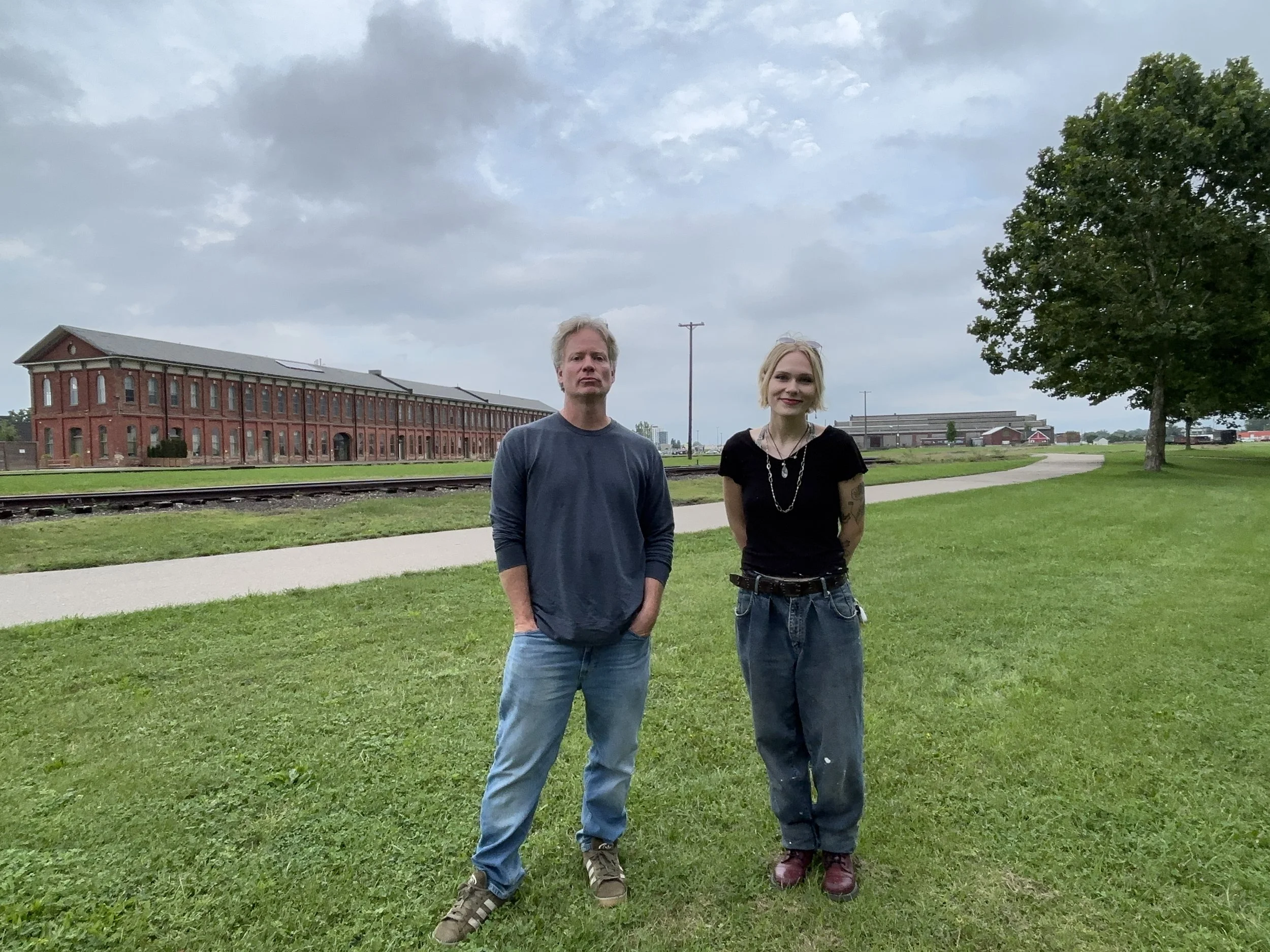
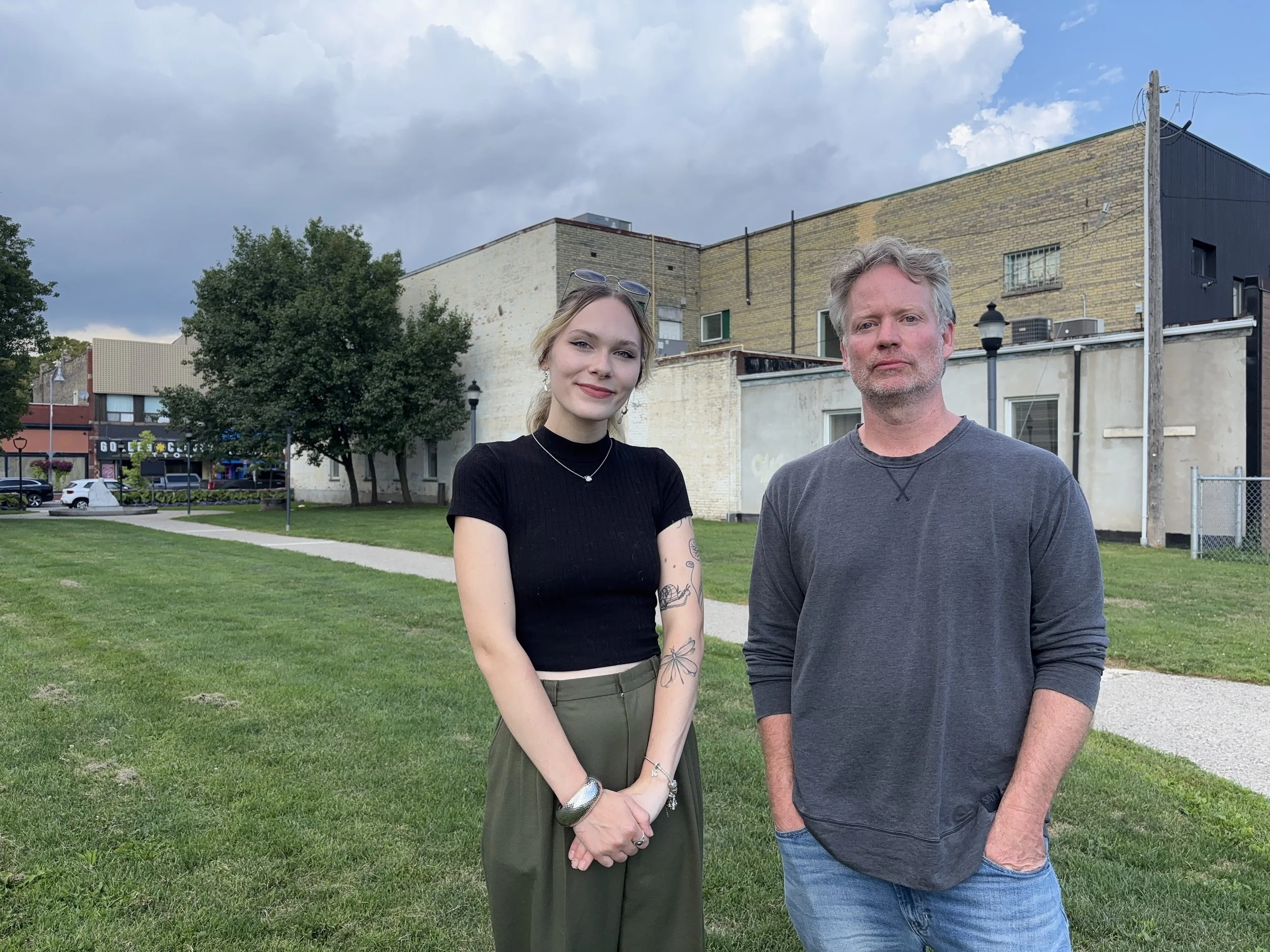
Photo: Carley Shearon and Andrew Gunn of young & free press stand in Hepburn Park in downtown St. Thomas.
Top Ten Ideas for the 2026 Municipal Election Campaign in St. Thomas
So, what are the top ten ideas that every candidate should contemplate during the current municipal election campaign in St. Thomas? Our team at young & free press has put together an intriguing list!
Municipal elections in Ontario are set for Monday, October 26, 2026. In St. Thomas, we see all the signs sprouting on lawns around the city, but what exactly is at stake this time around? Our hope is that candidates will transcend bland platitudes and campaign with vision.
This is the good news: St. Thomas is progressing through an exciting transformation in which tired conceptions of the community are fading and fresh perspectives are taking hold. Our team at young & free has contributed significantly to this changeover through the design and implementation of a series of community-building projects, including new murals, park spaces, education programs, environmental sustainability efforts & more. The City has acted boldly to generate new investment, address homelessness, and add new amenities to the parks and recreation profile of the community. All of these are positive trends!
Still, there are significant challenges. How should we continue to enhance the downtown core? What are the best ways to diversify the economic base of St. Thomas? When will City Council look carefully at building a vibrant, engaging district for young adults? What strategic investments can be made in arts and culture to boost businesses downtown? As the city grows, how can we get ahead of the curve on transportation and avoid the plague of suffocating traffic? These are important issues, and naturally there are many others.
Here is our list of ‘Top Ten Ideas for the 2026 Municipal Election Campaign in St. Thomas’:
1 / Hire a Director of Arts and Culture at City Hall. Typically, the City has taken the approach of being supportive of local organizations seeking to launch events and boost the culture of the community, but the time has come to hire a leader with vision, provide a meaningful budget, and actively work to program local venues, parks, and empty spaces. Everyone loves a big event – still, these require a lot of time and money, and in a small market this is tough to manage consistently. We are interested in the vibrancy of everyday life – music, art, fun athletic competitions, buskers, mini-festivals and pop-up markets. There are endless possibilities that will encourage residents and visitors to visit and walk downtown. Right now, we are missing economic opportunities by failing to invest sufficiently in arts and culture.
2 / Strategically build a cultural centre for the community. This is an extension of our first idea. St. Thomas has done a fantastic job of adding recreation facilities community-wide, and now we need to focus on how to build intelligently for the arts and culture sector. Consider this: if we have a modern, attractive venue downtown putting on events consistently, this would be a massive benefit to cafés, restaurants and shops in the area. This can be as straightforward as constructing a black box theatre that is adaptable for concerts, theatre productions, film screenings, guest speakers, and small to mid-size conferences. Time to build new!
3 / No half-measures with the railway lands in the core. Currently, the Elgin County Railway Museum is closed due to structural issues with the building. Doug Tarry Homes has purchased a sizable portion of the old railway lands south of the CASO Station and the expectation is that there will be a residential development in the area eventually. Various discussions are underway regarding how these lands will evolve overall, and this will be key to the future of the city.
Following up on our first two points, we would like to make three bold suggestions for the railway lands: first, ask Fanshawe College about re-locating the St. Thomas / Elgin Regional Campus to this area; second, consider the needs of students and young adults, and build a lively residential and entertainment area for this age group – this will boost the whole downtown significantly; and third, establish the aforementioned cultural centre nearby to attract residents and visitors.
The main thing that brings people into shared spaces is other people. Talbot Street grew up along the railway line, and this means that we have a long main street full of commercial and residential buildings. This configuration, along with vacant properties and sprawling surface parking lots, really impacts the atmosphere. We need to do whatever we can to develop a series of vibrant parks and squares to boost daily life and facilitate special events. Our team initiated the construction of Westlake – Evans Park. We are now working with the City on the renewal of Hepburn Park. For the railway lands, we need distinctive shared spaces, lively residential areas, cultural amenities & connectivity. This is essential for the growth of the downtown core. Take a look at what Hip Developments has done with the Gaslight District in Cambridge.
4 / Initiate a parking strategy for downtown. There is a massive cost to subsidizing the parking of private vehicles in public spaces. If we want a vibrant, engaging downtown, the City should work with private property owners to determine our best options for parking and re-purposing surplus lots. This takes work and some tough decisions, but we are encouraged to see the City beginning to reimagine parking lots in the downtown core. Ideas to consider: build a multi-story parking garage to serve the area; sell off surface parking lots or use such spaces for more housing and cultural venues; and add new green corridors and bike storage. Build for people, not cars.
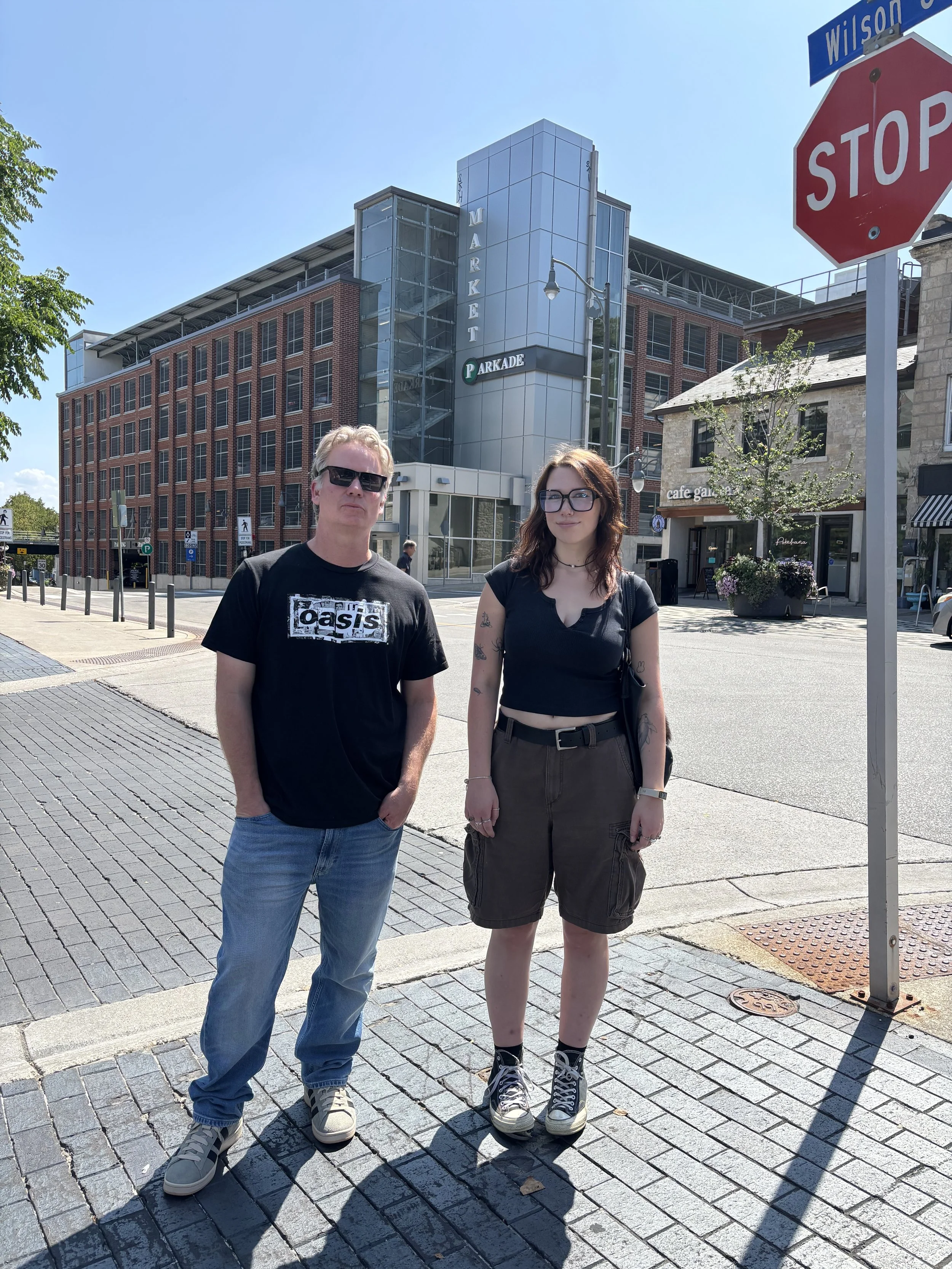
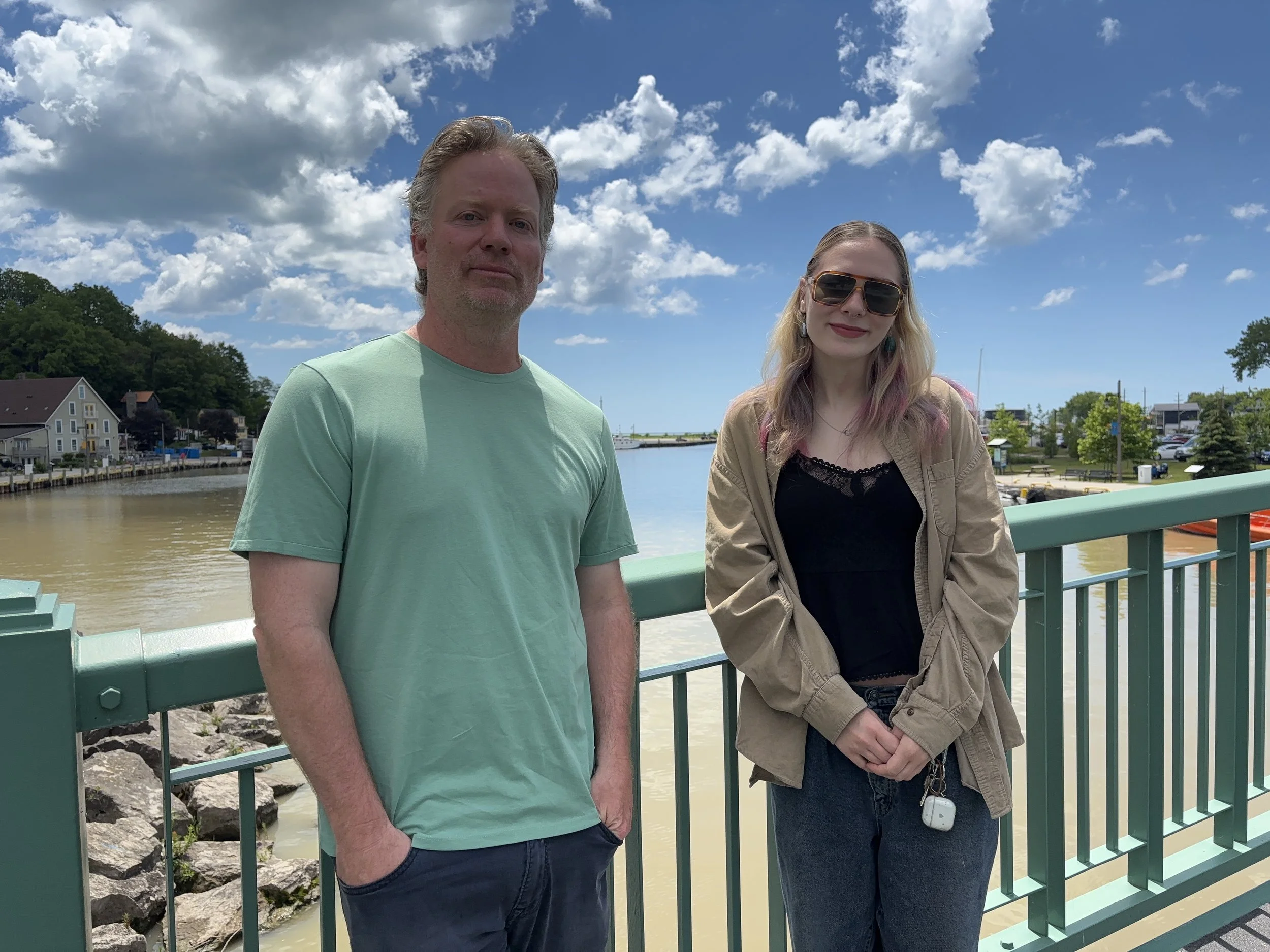
Andrew Gunn and Avelea Thorne of young & free press stand in front of Market Parkade in downtown Guelph. Structures like this can help free up surface parking lots for other uses in core areas.
5 / Review all options for reinventing the site of Arthur Voaden Secondary School. This is going to be one of the defining issues for the next decade locally. We know that many students and alumni are saddened by the closure of Arthur Voaden. The high school opened in 1926 and lasted a full century. Change has come, though, and we are intrigued by the possibilities for private – public partnerships. Ideally, any new development will take into consideration the immediate neighbourhood and the downtown as a whole. A few thoughts: if part of the site could include a parking structure, this could open up possibilities for the enhancement of the nearby Horton Farmers’ Market site, which has been such a success story for the community; if there can be a mix of residential, commercial and cultural uses on the Arthur Voaden site, this will build in more people living and working downtown; and if active green spaces can be included in the redevelopment of the site, this will help boost the liveability of the area.
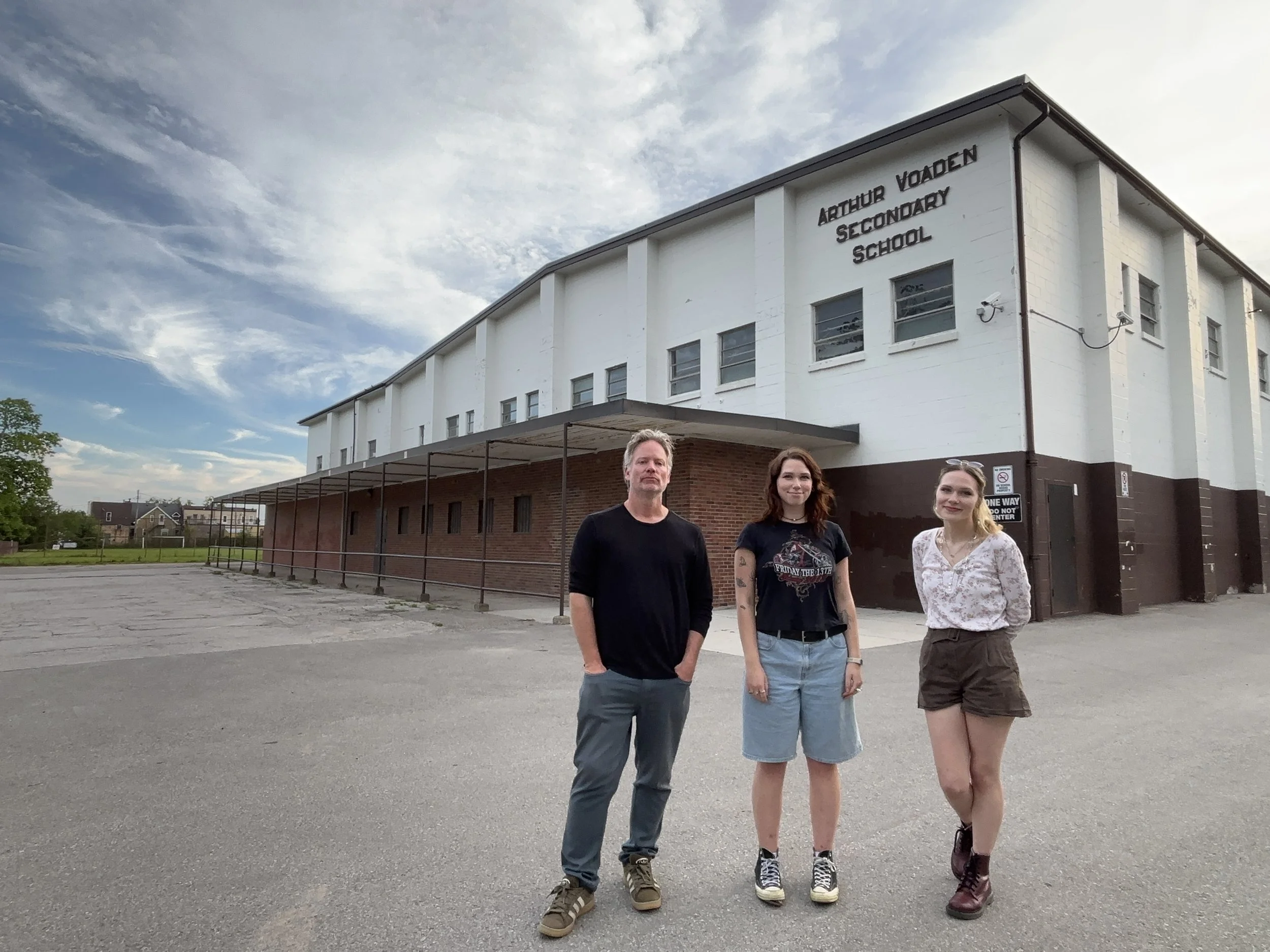
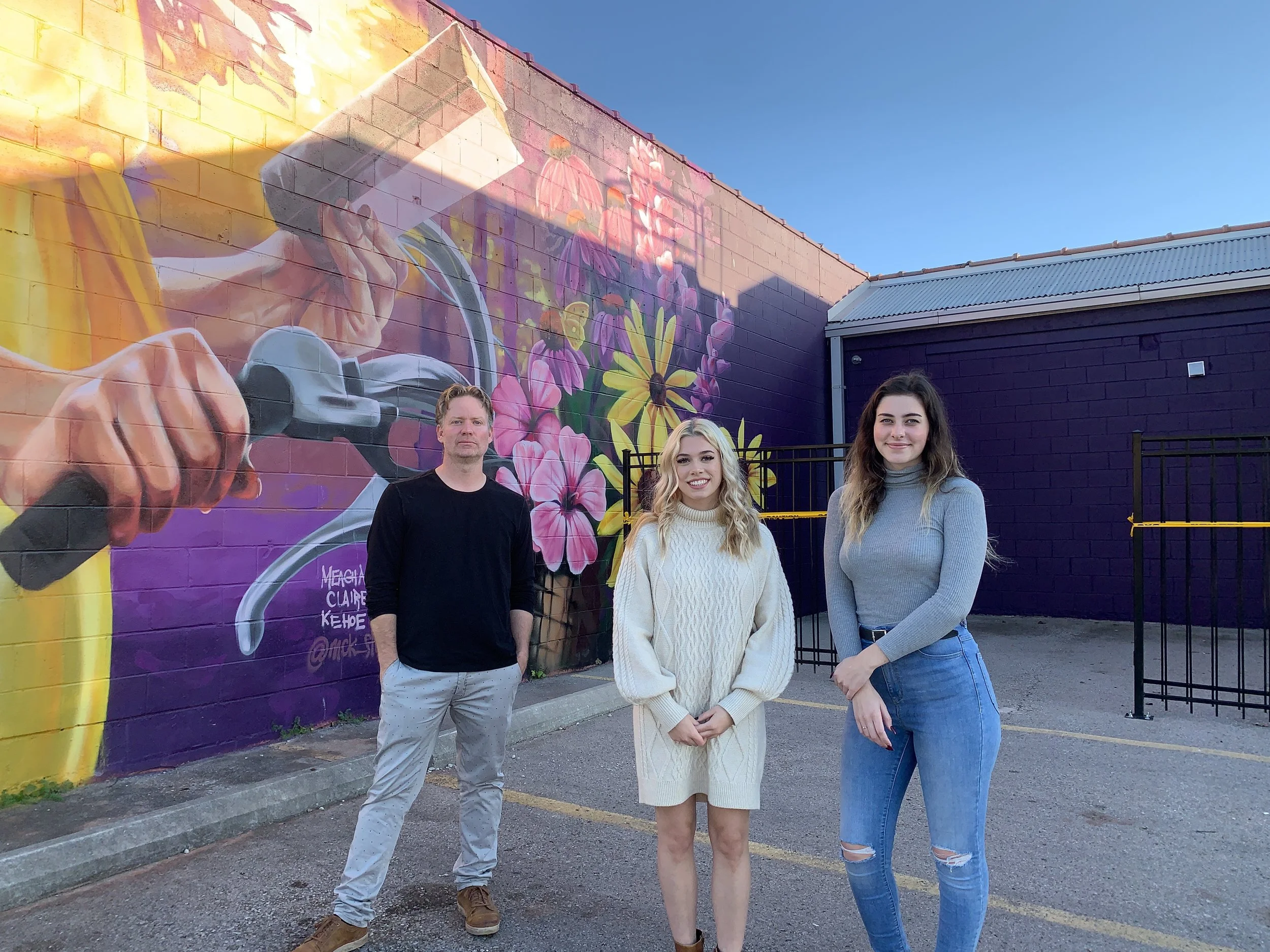
Andrew Gunn, Avelea Thorne and Carley Shearon of young & free press stand outside Arthur Voaden Secondary School in downtown St. Thomas. Opened in 1926, closed in 2026.
6 / Continue to invest in transit options. We can all see what is coming, right? As highways are expanded north of the city and the population of St. Thomas grows, we are headed for London-style traffic congestion. This is the point in time when we need leaders who will actually make courageous choices. Talking only about highway expansion and more cars, trucks and parking lots is really the riskiest path – we need to plan for the future and add rail links, better buses, and active transit connections. For the sake of the environment and our health and sanity, we can proactively reduce our dependence on cars and make other options safe and efficient. Let everyone else sit in traffic if they want – in St. Thomas, we could aim to be the Amsterdam of southern Ontario, emphasizing walking, cycling, and various forms of transit. Ultimately, this will help everyone trying to move around the city, including drivers.
There are lots of positive trends on which to build locally: we have a growing network of bike lanes; many people use local trails to walk or cycle; and regional bus services are developing, perhaps most notably ‘Middlesex County Connect Route 3’, which links St. Thomas, Dorchester, London and Southwold. Giving residents reliable transit options is essential, especially since the cost of car ownership these days can really limit opportunities for many people.
One thought: what if the City worked with the Municipality of Central Elgin and the Port Stanley Terminal Rail to run the train from St. Thomas to Port Stanley and back again once a weekend? In essence, establish a weekly passenger rail service. Residents and visitors could plan to take the train and avoid driving and parking in Port. The purpose would be to gauge the response and build an audience for alternative transit options. Get started, measure the results and refine the approach.
7 / Proactively protect local farmland. St. Thomas is a small, growing city in rural southwestern Ontario. Look around – we can all see the impact of residential and industrial incursion into prime farmland. To some extent, growth is positive and essential, but why not lead in this area and establish policies that recognize the importance of protecting farms? We can steer away from city planning that concentrates too much on roads and subdivisions. St. Thomas can be better than this. Emphasize density, transit options, protection of farmland and environmental corridors. Work effectively with neighbouring municipalities. Encourage upper levels of government to incentivize brownfield redevelopment more dependably.
8 / Indoor and outdoor ‘third places’ for youth. Many readers will be familiar with the concept of a ‘third place’ – if home is the ‘first place’ and work is the ‘second place’, a third place is a site where people gather socially, typically for recreation, learning, enjoyment of the arts, or simply conversation and community. American urban sociologist Roy Oldenburg popularized the term in his 1989 book The Great Good Place. There are lots of third places in St. Thomas: the St. Thomas Public Library, Streamliners Espresso Bar, tennis and pickleball courts, gyms, various places of worship, the St. Thomas Curling Club, Horton Farmers’ Market, and so on.
We want to flag the need for third places designed and operated by youth. Beyond home and school, teenagers also need spaces that provide a sense of community. Small-city life can be equally pleasant and stultifying for young people, and often getting somewhere else requires a vehicle. Why not consider the idea of supporting youth-run facilities that provide a ‘third place’ for teenagers? We are aware of the Ignite Youth Centre downtown, of course, but with the closure of Arthur Voaden Secondary School, this location may be less in the orbit of local students.
One example of a third place for youth is the skate park downtown. This is a busy spot mostly used by skateboarders in the 15-30 age range. Earlier this year, we added an open art wall on-site, where aspiring graffiti writers and mural artists can paint. Perhaps more amenities can be added in this area. Ultimately, we think there is an opportunity to build indoor and outdoor social spaces that are inspired and operated by local youth (with a bit of assistance, obviously).
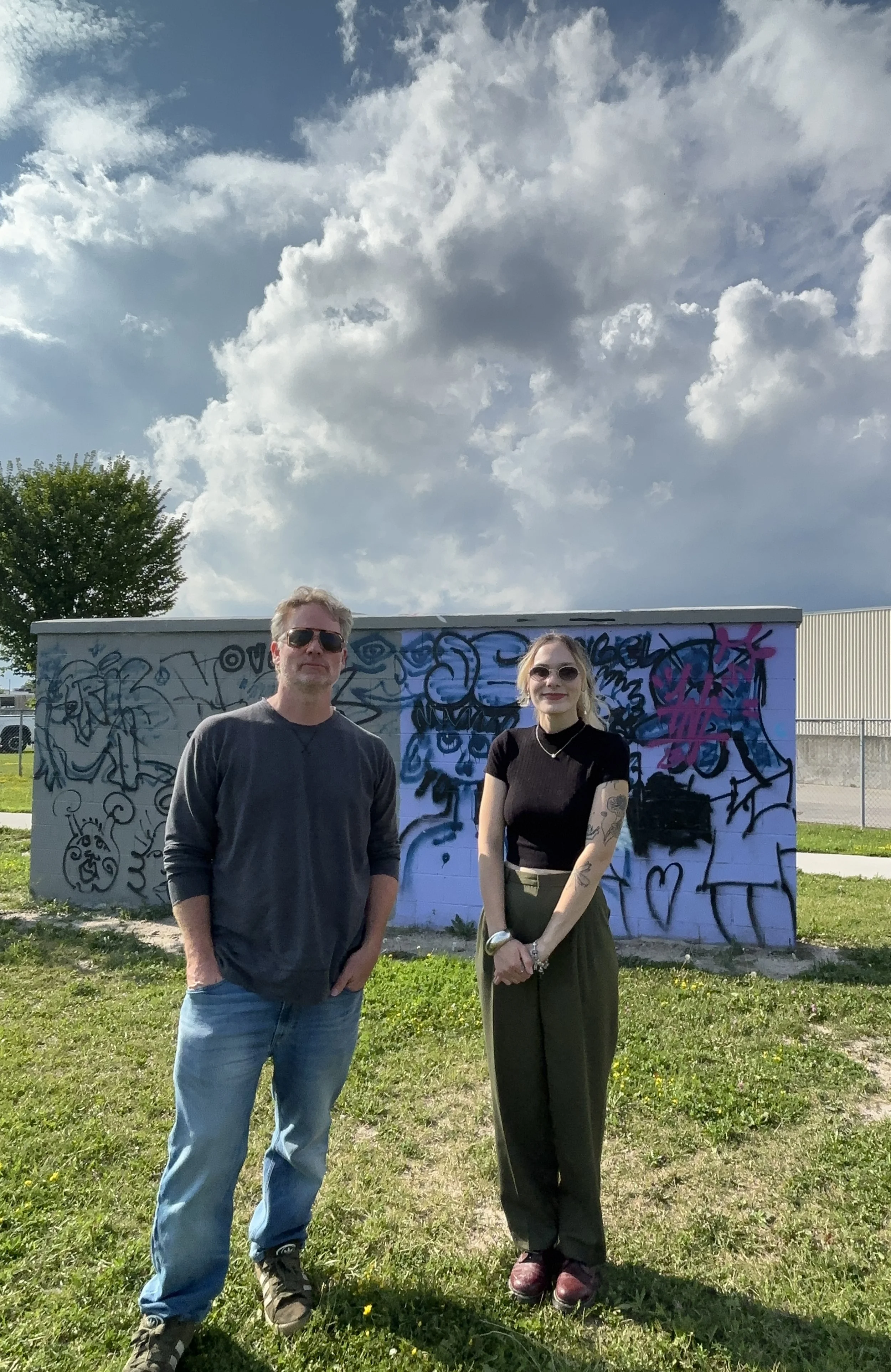
Our team at Andrew Gunn Consulting and young & free press worked in collaboration with the Parks and Recreation Department at the City of St. Thomas to install a new ‘Art Wall’ for emerging artists in the city. The wall changes on a regular basis. We always enjoy seeing what appears!
9 / Recognize the potential of the STEAM Centre. Full disclosure: members of our team were involved in the start-up of STEAM back in 2016, and we continue to collaborate with the excellent staff and volunteers. We want to encourage the City and other political leaders to look deeply at what happens already at STEAM and the incredible potential of this organization. Essentially, the STEAM Centre operates at the intersection of education and community – staff work with local school boards, Indigenous communities, colleges and universities, and simultaneously partner with private-sector businesses and organizations, charities and not-for-profits. For learners of all ages, the purpose is to integrate science, technology, engineering, art and math into education with a focus on emerging tech and design thinking. For the city – and wider region – staff members aim to examine challenges facing the area, prototype solutions and involve students in the process. The result is that the STEAM Centre is a platform for the continuous improvement of the community!
We appreciate that MPP Rob Flack has taken an interest in the STEAM Centre and sees the value of the programming. Certainly, some members of City Council seem intrigued, too. Our view is that we should take a collective step forward and elevate the STEAM Centre as a made-in-Ontario innovation that is facilitating new ways of learning and positive community collaborations.
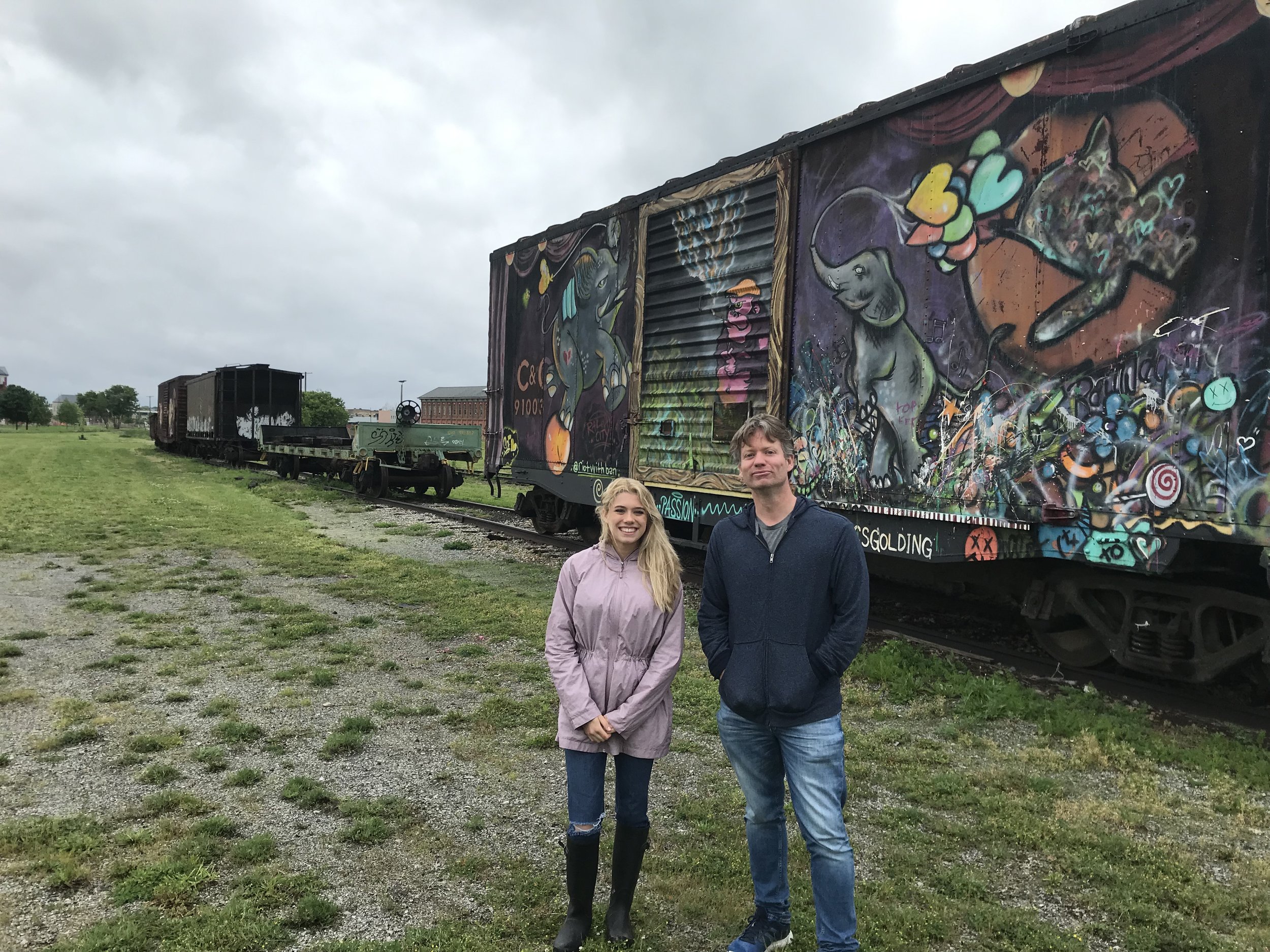
10 / Blend nature and tourist accommodations in the city. There are still a variety of old railway properties around St. Thomas that need reinventing. At the same time, we are lacking unique, boutique accommodation options for visitors. Would the City consider transforming some of these dormant sites by adding environmental features, such as rain gardens and urban forests, while also allowing for renovated railway cars to be installed as short-term accommodation options? This may seem like a wild suggestion, but the goal is to maximize the use of space within City limits, enhance the environment, and boost the local economy. Right now, the story of St. Thomas is often one of reinventing the remnants of the past — this is one more opportunity to do so and provide Instagram-worthy spots to stay around the city.
That’s the list! We hope these ideas spark conversation, and we are happy to hear interesting suggestions from others, too. The upcoming election is important for St. Thomas and we want the city to keep growing in imaginative and sustainable ways. Leadership and collaboration are the starting points.