The Future of Arts & Culture in St. Thomas
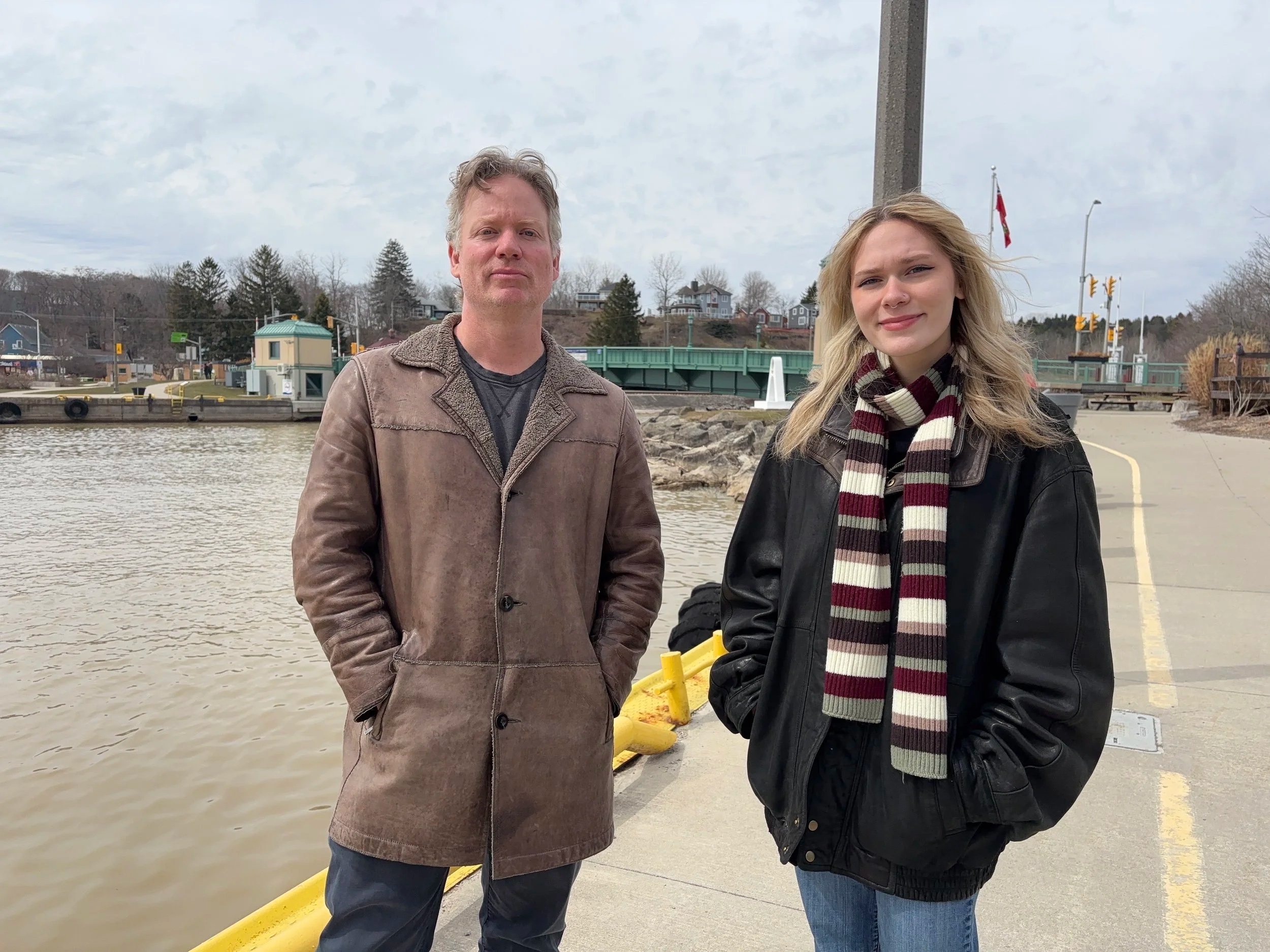
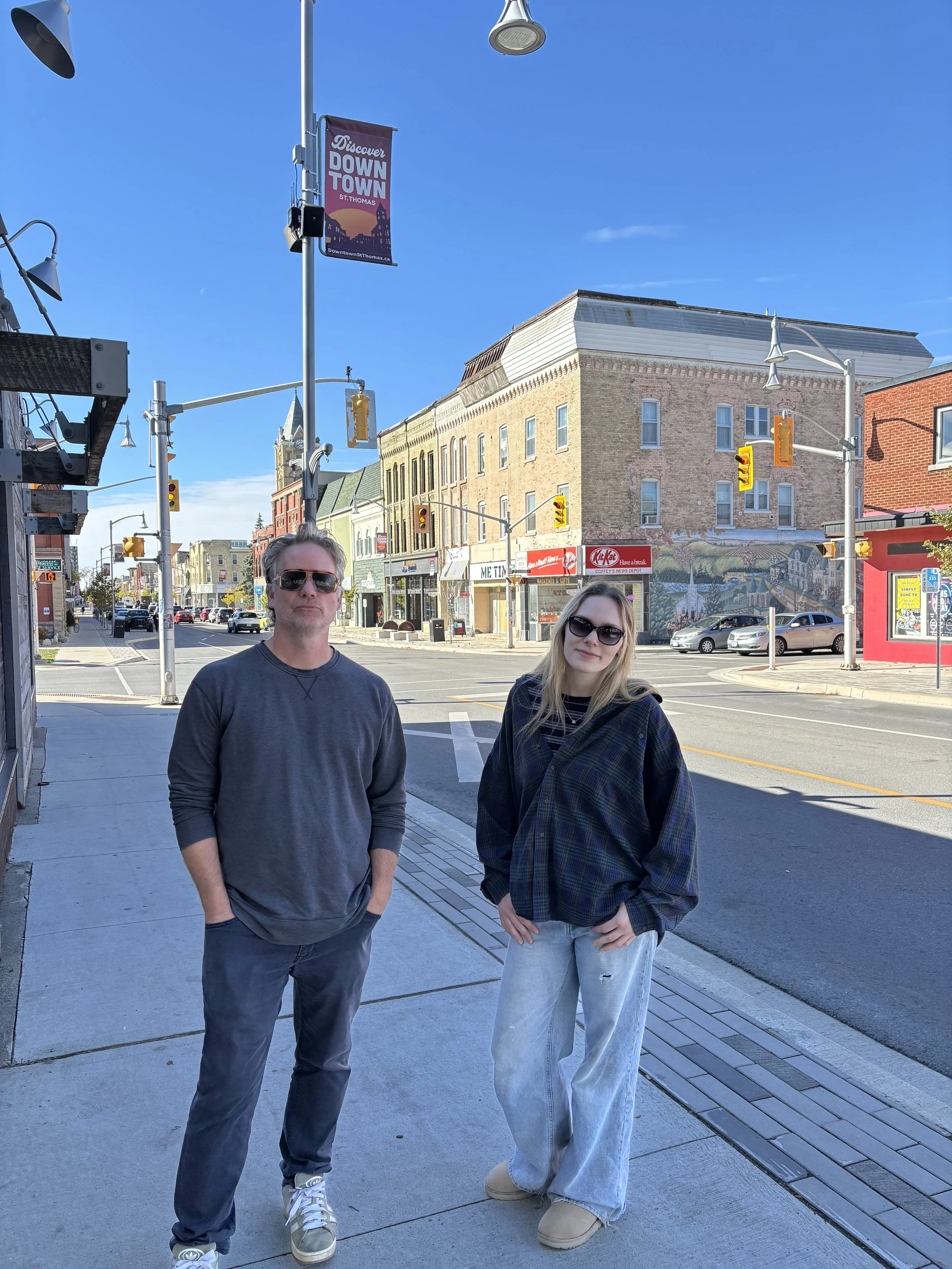
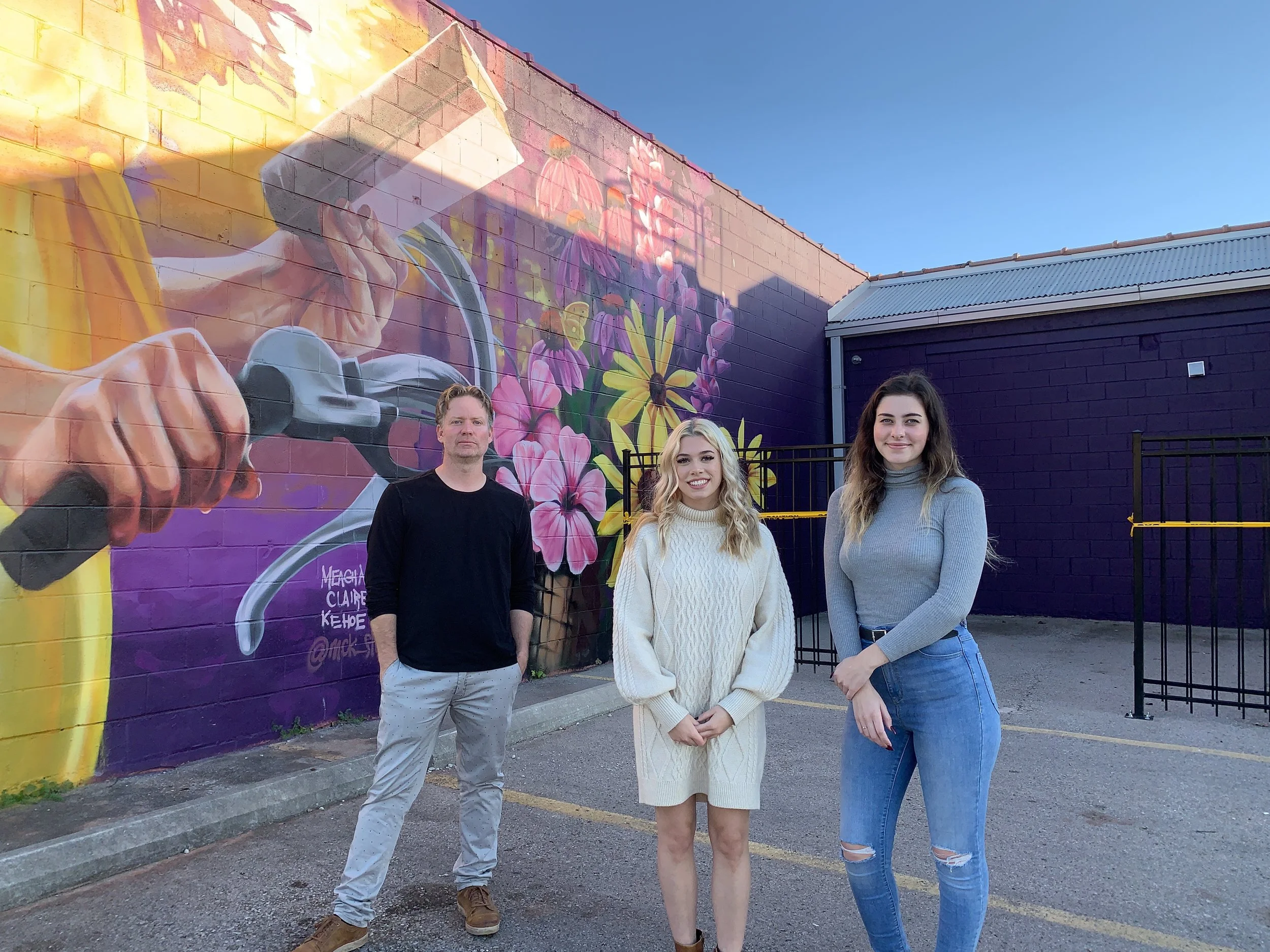
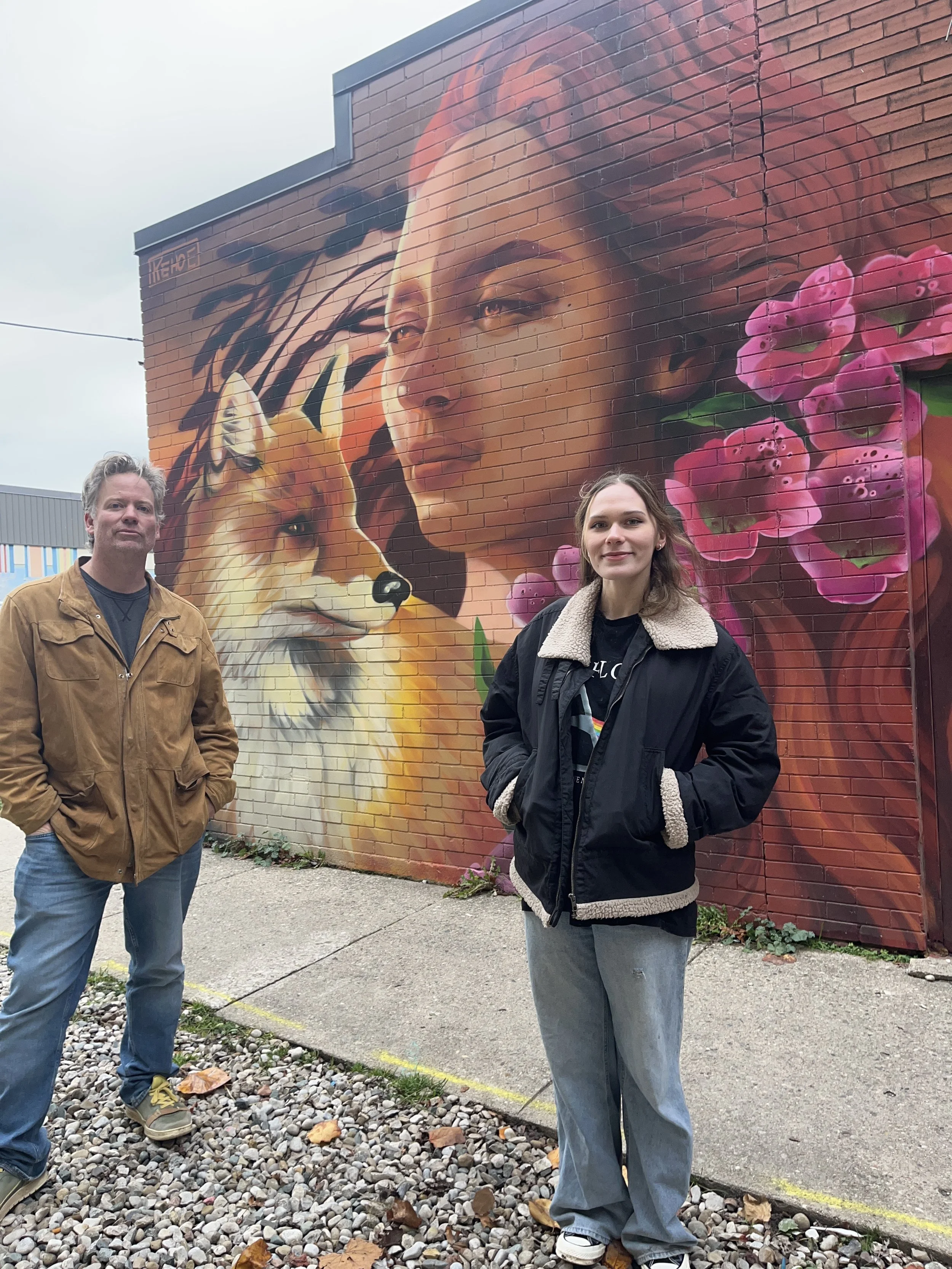
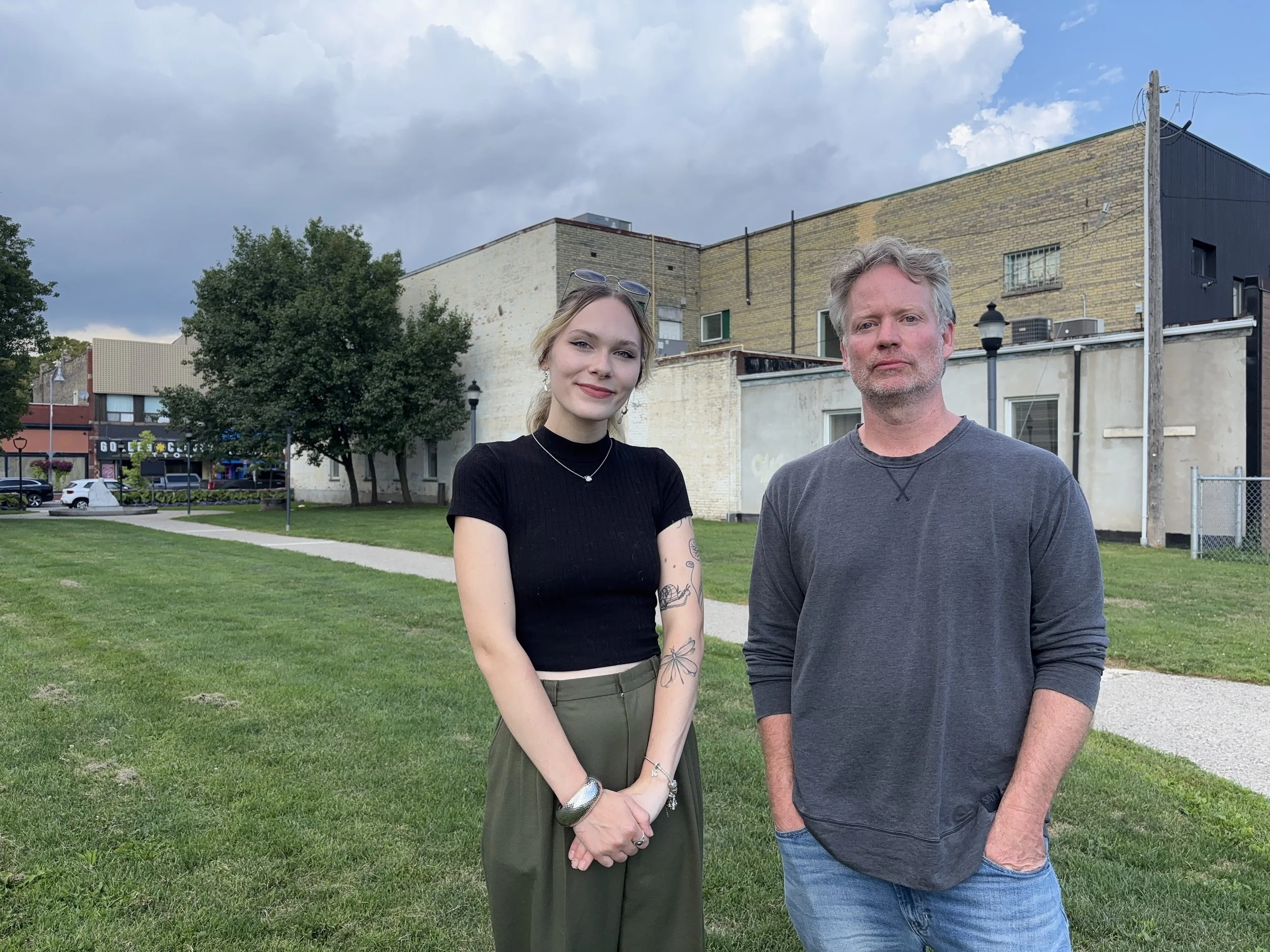
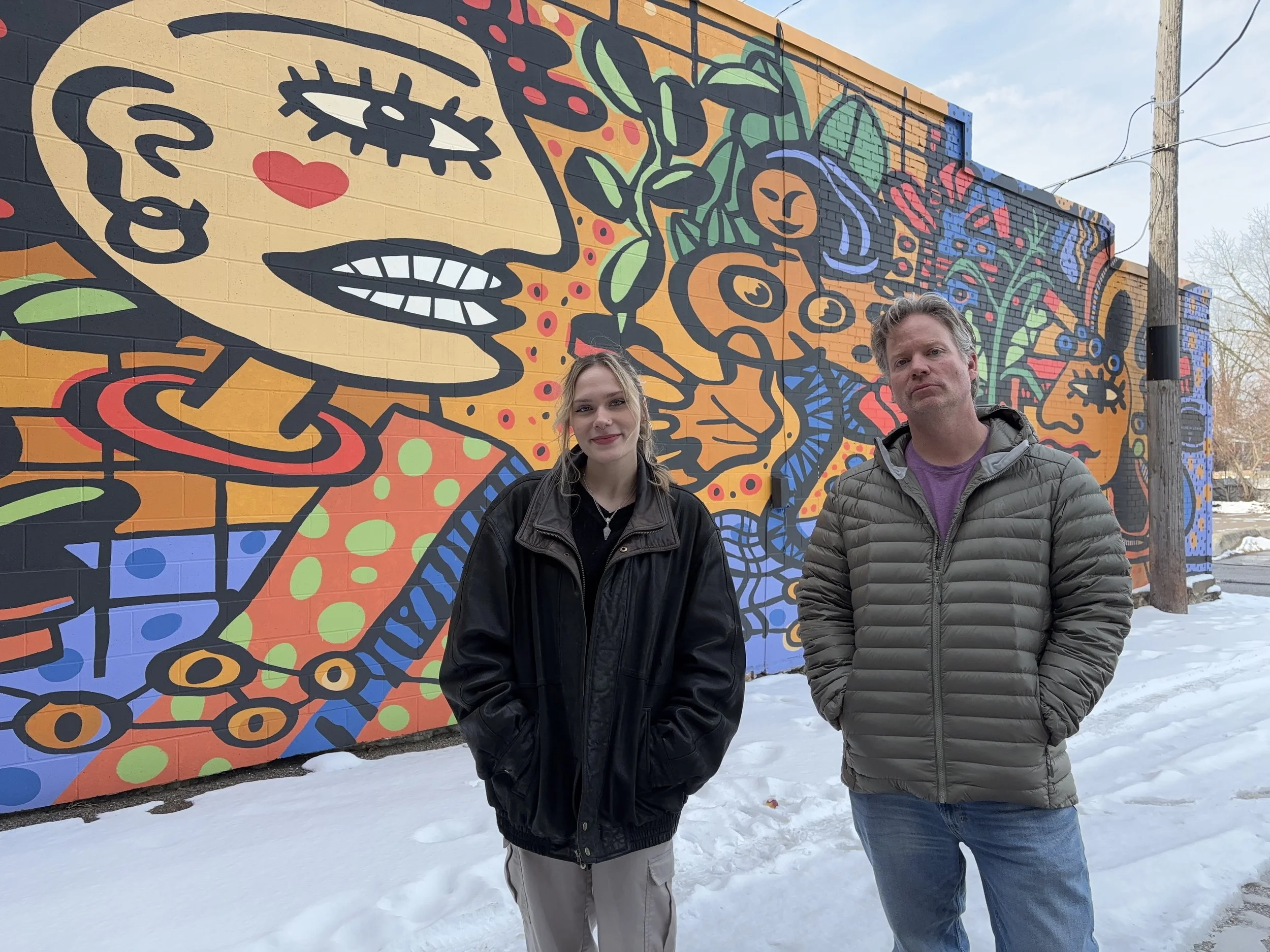
Photo: Carley Shearon & Andrew Gunn of young & free press have been gathering feedback from community members and local students on ‘The Future of Arts & Culture in St. Thomas’. The mural in the background is titled ‘La Chorcha’ & was painted by artist Andrew Lewis in 2022.
With the possibility that the City of St. Thomas might wish to develop an ‘Arts & Culture Master Plan’ for the community, our team offered to generate an early overview of what shape this could take. We are grateful to the St. Thomas Economic Development Corporation for the opportunity to consider the potential for arts and culture in the city. Throughout 2025, our team met with community members to gather input, and as part of our ‘Students Build Cities’ program with Thames Valley District School Board, we received lots of feedback from local students as well. The current expectation is that the population of St. Thomas will nearly double by 2050, swelling from roughly 45,000 to 80,000. Time to plan for the impact of this rate of growth city-wide …
Our primary consideration has been this: rather than thinking only about the cost of the City supporting arts and culture, perhaps we should consider how much the community is losing in the absence of substantial investments in this area. In our conversations with community members, we found that, in general, there is deep appreciation for the significant support that the City has demonstrated for sports and recreation; simultaneously, many people lament that the same approach has not been taken with the arts and culture sector. Developing a robust and innovative ‘Arts & Culture Master Plan’ could help drive strategic growth in this area.
From January to March 2026, we will be sharing our top five recommendations for ‘The Future of Arts & Culture in St. Thomas’ based on our work so far. Follow along here or on our Instagram page. Of course, this is only a preliminary list -- there is certainly lots of room for more ideas and we look forward to continuing to refine these suggestions and collaborate on others.
Note: over the past decade, our team has been heavily involved in coordinating private sector support for arts and culture in St. Thomas, including the ‘Track to the Future’ mural project, the development of new park spaces and recreation amenities, education programs, environmental initiatives, tourism offerings & more. Therefore, we are very much looking at this issue from the inside out, and acknowledge our angle of vision.
Top Five Recommendations for the Future of Arts & Culture in St. Thomas
1. One consistent theme in our conversations with community members was the desire for consistency. While special or annual events can be fun, St. Thomas lacks a central cultural destination that can deliver a steady schedule of events that will draw large numbers of attendees on a regular basis. Local businesses, like restaurants, cafés, shops and bars would benefit from this enormously, especially downtown. Therefore, our view is that the time has come to construct a new, purpose-built ‘Centre for Arts and Culture’ in the core. We heard lots of excellent ideas regarding what could be incorporated into this type of facility, including a black box theatre capable of adapting for concerts, theatre productions, film screenings, guest speakers and small to mid-size conferences. Additionally, there could be a social café, gallery and studio space for visual artists, and classrooms for ongoing opportunities in education. Another meaningful move would be to set up artist-in-residence positions, which could add new and diverse voices to cultural programming in the city. We recognize, of course, that building a Centre for Arts and Culture would be expensive, but having such a central destination in the community would draw residents and visitors in noteworthy numbers and give a substantial spin-off boost to businesses. Key considerations: right-size the venue and hire an excellent Artistic Director to program the venue to correspond with local interests.
2. We heard frequently that the community needs to continue investing in the renewal of parks and social spaces in the downtown core. Back in 2020, our team arranged a private donation of $500,000 to initiate the development of Westlake-Evans Park, the new green-space next to the St. Thomas Public Library. This has worked out well, adding a playground, outdoor ping-pong tables & impressive murals to the site (plus one addition still-to-come!) Further, we have been involved in the development of concept plans for the improvement of Hepburn Park as well as the enhancement of the lot at 606 Talbot Street. Ultimately, all these spaces should be similar but cater to diverse interests, offering unique features that promote distinct uses. Designs that emphasize movement between indoor and outdoor spaces can help draw visitors — patios, music venues, and media environments are obvious examples. Imagine if the downtown core featured a new ‘Centre for Arts and Culture’ surrounded by parkland, artwork and installations that encouraged residents and visitors to engage and stay in the space; beyond that, Westlake-Evans Park, Hepburn Park and 606 Talbot could all be used passively and actively — light programming on a day-to-day basis and the capacity to serve as venues during festivals and events. Arts and culture happen in downtowns. We need attractive shared spaces that help make the area more walkable, useful, and vibrant everyday and for special occasions.
3. What if St. Thomas could be the small city that figured out how to build opportunities and connections for young adults? Many community members that we spoke with emphasized how much St. Thomas loses from failing to understand the needs of this demographic. Consider this: when students leave the area for university or college, and then return after graduation, what does St. Thomas offer exactly? How does the city engage this age group generally, regardless of whether those in question are from the community originally? There is an opportunity here for St. Thomas to innovate, specifically by integrating arts and culture into the mix. If the City started to plan a new 'Centre for Arts & Culture’ downtown, why not design this as part of a 'social campus’ aimed at twenty-somethings? This could include starter-apartments, park space and a gym to complement all the features of the 'Centre for Arts & Culture’ — the black box theatre, café, gallery space, artist studios, classrooms and so on. Essentially, the City could set the stage for this age group to contribute substantially to the local economy and culture. Online connectivity allows for young adults to live in a smaller community and be flexible with work and play. Students at the St. Thomas / Elgin Regional Campus of Fanshawe College could be included effectively and meaningfully into this sort of development, too.
4. One of the main pieces of feedback that we received from the community revolved around the importance of supporting the growth of Indigenous programming and the promotion of diverse voices. In several discussions, we had people mention the significance of the new murals in the community by Indigenous artists – before these installations, there had been very little visibility of such artwork. The City has built upon this with the Seven Feathers crosswalk by City Hall and events to mark the annual National Day for Truth and Reconciliation. Another step that could be taken would be to introduce a physical space for Indigenous community members. This could be included in the new ‘Centre for Arts and Culture’. Looking at ways to engage artists from a variety of backgrounds, one achievable goal for both the short-term and long-term would be to fund an artist-in-residence position, which would increase the consistency of cultural output. Imagine having a new writer, musician or visual artist in this position each year! This would be a wonderful way to elevate arts and culture locally and build connections provincially and nationally.
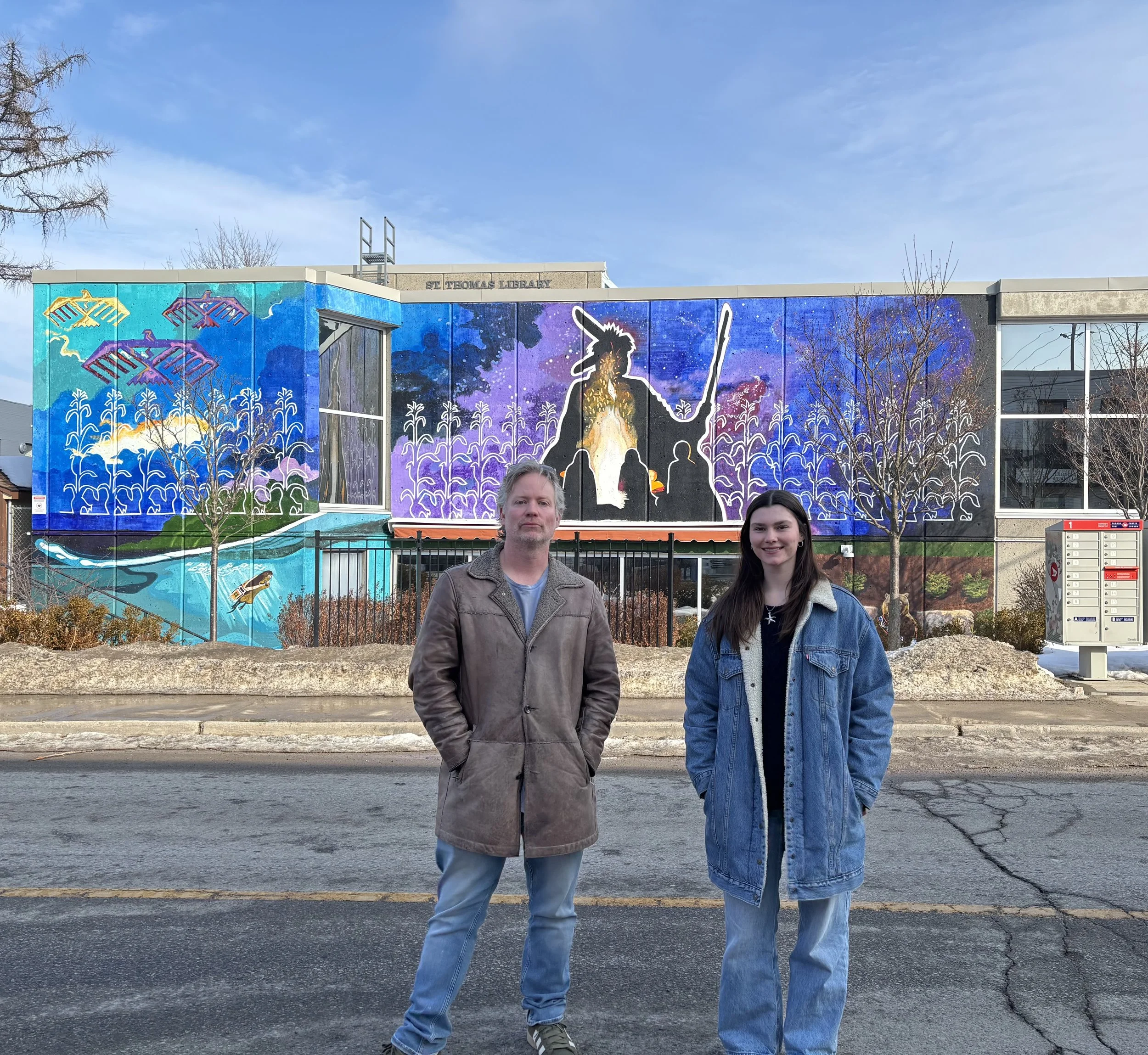
Andrew Gunn and Madison Comfort of young & free press stand in front of the beautiful mural ‘All Are My Relatives’ by artist Nancy Deleary of Chippewas of the Thames First Nation. The artwork is located on the west exterior wall above the outdoor reading garden at the St. Thomas Public Library.
5. Along with direct support for arts and culture, there is a clear need to consider the overall atmosphere of our surroundings. How do we encourage more people to walk, cycle or use alternative transit to get downtown? Many people still believe that easier access for cars and more surface parking spaces help to revive core areas and make communities more inviting. The opposite is frequently the case. With arts and culture investments, there should be a concurrent strategy to get people out of cars and into public spaces, onto sidewalks, and into local businesses and cultural institutions. Fortunately, St. Thomas has taken some steps in the right direction – re-purposing parking lots, emphasizing the importance of walking and cycling trails, and developing ‘complete streets’ city-wide. Our ongoing ‘Track to the Future’ mural project, supported significantly by private funders, is one example of investing in arts and culture to promote walking and cycling through the development of guided and self-guided tours. Further, we installed a sound system on a portion of Talbot Street to add music to the space. So much more needs to be done, however, to build a truly welcoming downtown. Promote and support walking, cycling, transit and alternative transit through smart design. Evolve beyond strict ‘heritage’ ideas and build modern, inviting public spaces that attract diverse groups of all ages. Here is another promising idea that emerged in our conversations with community members: develop and promote a ‘picnic trail’, basically a network of pavilions that encourage residents and visitors to explore the community on foot or bike and eat outdoors. There is an interesting tradition of picnicking in Ontario – imagining an iconic design for these structures could be a lot of fun! This is a relatively simple concept that St. Thomas could embrace and promote successfully. In essence, blend food & drink with arts & culture to foster walkability. There are lots of opportunities to make this happen locally.
We are so grateful to everyone who met with us to share ideas! Through the process, ‘The Future of Arts and Culture in St. Thomas’ started to come into view. Stay tuned as we develop new projects.